Where to Find Replacement Treadmill Parts
If you plan to replace treadmill parts yourself, you'll be pleased to know that virtually everything from a simple safety key to a complete motor control board can be ordered online.
The tricky part isn't necessarily finding a treadmill part. It's making sure you're buying the right part for your exact treadmill.
Before ordering anything, find the brand, model number and, when available, serial number of your treadmill. Don't assume that a belt, control board or motor listed for your brand will automatically fit your machine. Manufacturers may use different parts on different models—and sometimes even different versions of the same model.
Once you have that information, there are several good places to look for replacement treadmill parts, including the manufacturer itself, specialty fitness equipment parts companies and larger online retailers.
Here are the parts you're most likely to need, where to find them and a few things to consider before attempting the repair yourself.
Where Is the Best Place to Buy Treadmill Parts?
We'd start with the treadmill manufacturer, especially if your machine is relatively new or still under warranty.
The manufacturer can tell you the exact replacement part intended for your model, and that's particularly important with electronic components such as consoles, motor control boards and incline motors.
If the manufacturer no longer carries the part—or you simply want to compare your options—there are several companies that specialize in fitness equipment parts.
Treadmill Doctor is one of the most useful places to start. They currently carry walking belts, safety keys, motor controllers, drive motors, drive belts, decks, consoles, power boards, incline motors, rollers and other treadmill components, and you can search by product, model number or part number.
Sportsmith is another good resource, particularly if you're looking for parts for older or commercial-grade equipment. They carry treadmill belts, decks, safety keys, drive belts, consoles and many other components across a long list of manufacturers. Their equipment lookup also emphasizes using the model and serial number to identify the correct parts.
National Gym Supply is another source worth checking, especially for commercial equipment or a hard-to-find component. Its treadmill inventory includes everything from small hardware and cables to controllers and console components.
Amazon can still be useful, particularly for simpler items such as lubricant, safety keys and some replacement belts. Just pay close attention to compatibility before ordering.
Find Your Treadmill Model Number First
This is worth repeating because it can save you a lot of trouble.
Don't order a replacement treadmill part based on the brand name alone.
A NordicTrack treadmill manufactured several years ago may have little in common internally with a current NordicTrack. The same applies to ProForm, Sole, Horizon and most other manufacturers.
Look for the model and serial-number label on the treadmill. Depending on the machine, it may be located on the frame near the power cord, underneath the motor cover, along the base or elsewhere on the frame.
Your owner's manual may also identify the model.
Once you find it, take a picture of the label with your phone. That gives you the information you'll need while searching and can be useful if you contact the manufacturer or a parts supplier for help.
Common Treadmill Replacement Parts
A treadmill looks relatively simple from the outside, but there are quite a few components working together underneath the hood and deck.
Some are inexpensive and relatively easy to replace. Others can cost hundreds of dollars and aren't something we'd order until we were reasonably certain we'd diagnosed the problem correctly.
Here are some of the most common treadmill parts you may encounter.
Treadmill Motor Control Boards
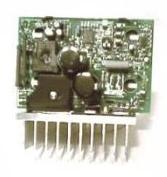
The treadmill motor control board (MCB), sometimes referred to as the motor controller, is an important—and potentially expensive—component.
It helps control power going to the drive motor and therefore plays a role in how the treadmill belt operates.
If your treadmill suddenly has problems maintaining speed, won't start the belt or displays an error code, the motor control board could be involved. But don't automatically assume the control board has failed.
A problem elsewhere in the treadmill can produce similar symptoms.
Before spending money on a new board, check the owner's manual and troubleshooting information for your particular treadmill. Inspect the obvious things first, including the power source, walking belt condition and lubrication, and consider contacting the manufacturer or a qualified treadmill technician if you're unsure.
Motor control boards aren't cheap, so this isn't a part we'd replace simply to see if it fixes the problem.
If you know the issue is the treadmill motor itself, replacement motors are also available for many machines.
Treadmill Walking Belts
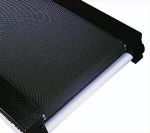
Treadmill belts are one of the more common replacement items.
The walking belt takes a lot of abuse over the life of the treadmill. Eventually it may become worn, stretched, damaged or difficult to keep properly adjusted.
Replacing a walking belt is something many treadmill owners can handle themselves if they're comfortable working on the machine.
Before ordering, you'll need your treadmill's exact make and model. Don't simply measure the old belt and buy something that looks close. A treadmill-parts supplier can usually match the proper replacement belt to the model.
You'll also want to pay attention to lubrication requirements. Some replacement belts arrive pre-lubricated or are designed for a particular maintenance system, while others require lubrication according to the treadmill manufacturer's instructions.
Drive Belts
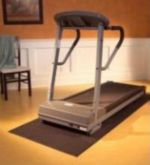
Don't confuse the walking belt with the drive belt.
The walking belt is the large surface you walk or run on. The drive belt is located underneath the motor cover and transfers power from the drive motor to the front roller.
If the motor is running but the walking belt isn't moving properly—or you're hearing slipping or unusual noises—the drive belt is one of several components that may need to be inspected.
Drive belts are generally much smaller and less expensive than walking belts, but again, you need the correct belt for your machine.
Safety Keys
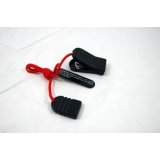
A missing treadmill safety key can render an otherwise perfectly good treadmill unusable.
Fortunately, safety keys are usually among the simplest and least expensive treadmill replacement parts.
Some treadmills use fairly basic magnetic keys, while others require a specific shape or design. Although you'll see "universal" safety keys for sale, don't assume every key works with every treadmill.
Search by your treadmill's model number whenever possible. Specialty suppliers such as Treadmill Doctor and Sportsmith currently list safety keys for many specific treadmill models.
And don't bypass the safety-key system just to get the treadmill running. It's there to stop the belt quickly if you fall or move too far away from the console.
Treadmill Rollers
Your treadmill has front and rear rollers that help the walking belt move smoothly across the deck.
Rollers can eventually wear out or develop bearing problems. Signs of trouble may include unusual noises, rough belt movement or difficulty keeping the belt properly adjusted.
Replacement rollers are available for many treadmills, but this is another part where model compatibility is critical. Treadmill Doctor, for example, currently lists model-specific replacement rollers along with belts, control boards and other components.
Treadmill Motors
The drive motor is one of the most important—and expensive—parts of a treadmill.
Fortunately, a motor problem doesn't necessarily mean you have to replace the entire machine.
Replacement motors are available for many treadmill models, particularly from the major manufacturers. However, we'd want to be confident that the motor is actually the problem before buying one.
If you aren't comfortable diagnosing electrical and mechanical issues, this is a good point to consider professional help. You don't want to replace a perfectly good motor when the actual problem is the controller, wiring, walking belt or another component.
You can learn more about how treadmill motors work in our treadmill motor guide.
Incline Motors
If the treadmill runs normally but the deck won't raise or lower, the incline system may need attention.
That doesn't automatically mean the incline motor has failed. Calibration, wiring, sensors or another component could be responsible.
Replacement incline motors are available for many treadmills, and specialty suppliers currently list them alongside other model-specific components.
Check your treadmill's troubleshooting procedure before ordering one, since some incline problems can be resolved through recalibration.
Treadmill Decks
The deck sits underneath the walking belt and takes the impact of every step.
Over time, a deck can become worn or damaged. Depending on the treadmill, you may be able to replace the deck rather than replacing the entire machine.
This isn't something that needs routine replacement, but it's worth investigating if you have an otherwise good treadmill with a worn running surface.
Both Treadmill Doctor and Sportsmith currently sell replacement treadmill decks for compatible models.
Consoles, Displays and Electronics
Modern treadmills have considerably more electronics than they used to.
Depending on the machine, replacement parts may include the entire console, display, keypad, power supply board, wiring harness or individual electronic components.
This is one area where we'd start with the manufacturer whenever possible.
A console that looks identical to yours isn't necessarily compatible with your treadmill. With expensive electronic components, verify the exact part number before ordering.
Power Cords, Switches and Smaller Parts
Sometimes the treadmill itself is fine and you just need a small component.
Power cords, switches, end caps, hardware and other smaller treadmill parts are readily available for many machines. Specialty parts suppliers carry a surprising number of these items; Treadmill Doctor, for example, currently lists power cords and end caps among its treadmill replacement categories.
Again, the model number is your friend.
Lube Kits and Maintenance Items
Not everything you order for a treadmill is technically a replacement part.
Treadmill maintenance items such as lubricant and cleaning products can help keep the machine operating properly and may help prevent premature wear.
But don't assume every treadmill uses the same lubricant.
Check the manufacturer's instructions before applying anything underneath the belt. Some treadmills require silicone lubricant, some use other systems, and some belts or decks are designed to require little or no owner lubrication.
Using the wrong product—or lubricating a treadmill that isn't supposed to be lubricated that way—can create problems rather than solve them.
Should You Use OEM or Aftermarket Treadmill Parts?
You'll sometimes have a choice between an original equipment manufacturer (OEM) part and an aftermarket replacement.
An OEM part is made or specified for the original manufacturer. An aftermarket part is produced as a compatible replacement.
We wouldn't automatically rule out aftermarket parts. They can be useful, particularly for an older treadmill when the original component is no longer available.
But compatibility matters much more than saving a few dollars.
For a safety key or simple hardware, the decision may be straightforward. For an expensive motor controller, console or other electronic component, we'd be much more careful.
If you're uncertain, ask the parts supplier whether the component is compatible with your exact model and serial number before ordering.
Can You Replace Treadmill Parts Yourself?
It depends on the part—and on you.
Replacing a safety key obviously requires no mechanical knowledge. Many treadmill owners can also handle basic maintenance and certain belt or hardware replacements with a good owner's manual and the proper tools.
Once you're dealing with motors, control boards, electrical systems and complicated disassembly, things change.
Remember that treadmills combine electricity, moving components and a very heavy machine. Unplug the treadmill before opening covers or attempting basic service, and don't attempt an electrical repair you aren't qualified to perform.
There's nothing wrong with calling a professional when a repair is beyond your comfort level.
Our treadmill troubleshooting guide can help you narrow down the problem before you start ordering parts.
Is the Treadmill Worth Repairing?
This is a question that doesn't get asked enough.
Just because you can find a replacement part doesn't necessarily mean you should buy it.
If you have a relatively new $2,000 treadmill that needs a belt or control board, repairing it may make perfect sense.
If you have a 15-year-old entry-level treadmill that needs an expensive motor, new walking belt and other work, you may be better off putting that money toward a new machine.
Consider:
- The treadmill's age
- What you originally paid for it
- The cost of the replacement part
- Whether other components are also worn
- The cost of professional labor, if needed
- Whether replacement parts are becoming difficult to find
- What a comparable new treadmill would cost
There's no magic formula. We just wouldn't spend hundreds of dollars repairing an old treadmill without first looking at what that same money could buy toward a replacement.
Don’t Void Your Treadmill Warranty
Keep in mind that tinkering under the hood unnecessarily or replacing certain worn or defective parts could affect your treadmill warranty.
Read the warranty before you get started.
If the treadmill is still covered, contact the manufacturer before taking anything apart. The part—or even the repair itself—may already be covered.
Treadmills are heavy and expensive to haul to a shop, and it can be costly to have a technician come to your house once the warranty has expired. If you can safely handle a simple repair yourself, you may be able to save considerable time and money.
But there's a big difference between replacing a worn belt and experimenting with expensive electronics when you aren't sure what's wrong.
Our Advice On Finding the Right Treadmill Part
Start simple.
Find your brand, exact model number and serial number. Check the owner's manual. If the treadmill is still under warranty, contact the manufacturer first.
If you need to purchase the part yourself, compare the manufacturer's price and availability with specialty treadmill-parts companies such as Treadmill Doctor, Sportsmith and National Gym Supply. Amazon can still be useful for certain common parts and maintenance products, but don't buy something merely because the listing says it fits your brand.
Most importantly, diagnose before you buy.
A belt that stops moving doesn't automatically mean you need a motor. An incline problem doesn't automatically mean you need an incline motor. And an error code doesn't necessarily mean an expensive control board has failed.
A little troubleshooting before ordering can save you from buying a part you never needed in the first place.
If you're still trying to figure out what's wrong, start with our Treadmill Troubleshooting – What to Do When Your Treadmill Is Not Working guide. If you've determined that the repair is beyond what you want to tackle yourself, see Treadmill Repair Service: A Look at Your Options.
And if you've just purchased a new machine rather than repairing the old one, our Home Treadmill Assembly Is Not That Difficult guide can help you get started.